Home / What does a weight lifting belt do?

WHAT DOES A WEIGHT LIFTING BELT DO?

Updated: 11 December 2025 

Lady with a weight lifting belt. The belt is held open showing the side.

WHAT IS A LIFTING BELT?

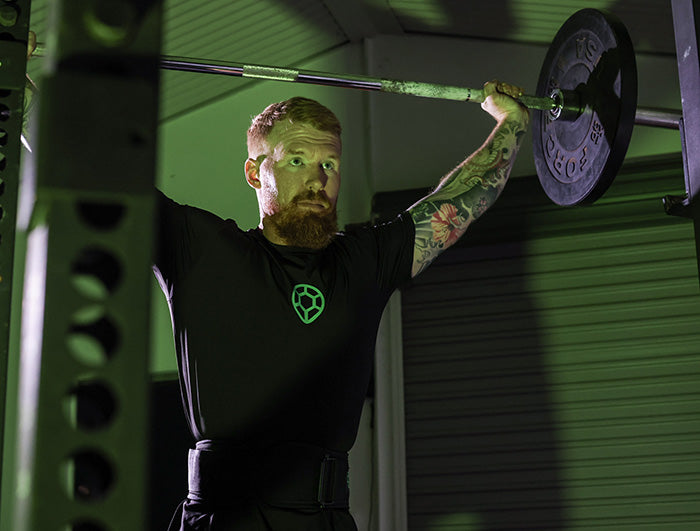
 A Weight Lifting Belt is a broad strap worn around the waist during lifting exercises. It's designed to support heavy lifting by stabilizing the core. A weightlifting belt increases intra-abdominal pressure (IAP). When you brace against the belt, it creates a rigid support system for your spine, stabilising your trunk and enabling safer, heavier lifts.

WHY POWERLIFTERS, WEIGHTLIFTERS, AND CROSSFIT ATHLETES USE A LIFTING BELT

Powerlifters, weightlifters, and CrossFit athletes use belts to lift more weight safely. Belts increase IAP by 40%, enhancing core stability and reducing spinal stress (“Effects of a belt on intra-abdominal pressure during weight lifting” – Study by Harman et al., 1989). From my experience, wearing a belt during a 1RM makes me feel more stable and confident to push harder.

ARE LIFTING BELTS NECESSARY? 

For those asking, do you really need a weightlifting belt? Belts are beneficial for heavy lifting but not necessary for everyone. Their necessity depends on your lifting goals and the loads you handle. They are particularly useful for lifts above 80% of your one-rep max (1RM). If you’re aiming for heavy lifts, a belt can be a game-changer. For casual lifters or those focusing on lighter weights, it might not be as crucial. Belts are tools—useful but not indispensable.

WHEN SHOULD YOU WEAR A LIFTING BELT?

Use your belt for the heavier work, not for everything. A simple rule is to put it on once you are lifting around 75 percent or more of your max on big compound lifts like squats, bench press and deadlifts. That is usually where bracing gets harder, technique matters more and a belt can give you extra support and confidence under the bar.
 

You do not need the belt for every warm up and back off set. Training some sets without it helps keep your core working hard on its own so you are not relying on the belt to do all the stabilising for you. Many lifters save the belt for their top working sets and heavier singles or doubles, while doing lighter sets and accessories belt free. That way you build real core strength, but still get the benefit of the belt when the weight gets serious.

BENEFITS OF WEIGHT LIFTING BELTS

1.    Improving Core Stability: Increases Intra-abdominal Pressure: Weightlifting belts improve core stability by increasing IAP. This turns your core into a solid support column, aiding in trunk stabilisation (“Core exercises elevate trunk stability to facilitate skilled motor behaviour of the upper extremities” – Study by Miyamoto et al., 1999).


2.    Increases Muscle Engagement in the Erector Spinae (Lower Back): Belts boost muscle engagement in the lower back, increasing IAP and activating the erector spinae muscles. This helps maintain proper lifting form and prevent injuries.


3.    Reduce Spinal Stress & May Reduce Risk of Lower Back Injury: Belts may reduce spinal stress, minimising the risk of hyperextension and other spinal injuries. They significantly reduce spinal compression forces (“The effectiveness of weight-belts during multiple repetitions of the squat exercise” – Study by Lander et al., 1992).


4.    Improve Lifting Performance: Belts enhance performance by allowing you to handle heavier weights with better form. They improve lifting efficiency by decreasing muscle excitation required for a given load.


RELATED ARTICLE : How to use lifting straps (how to guide)


HOW TO SELECT YOUR FIRST LIFTING BELT. 

If you’re buying your first lifting belt, comfort matters. A very stiff belt can feel harsh on your ribs and hips, and it can make it harder to move naturally, which then affects your technique. A belt with a bit of flex is usually the better starting point because it lets you brace properly without feeling restricted. It also helps you learn how a belt should sit, how tight it should feel and how to use it confidently before you step up to a firmer style later on.

Weightlifting belts increase intra-abdominal pressure, stabilise your core, support your lower back, and enhance lifting performance. While not necessary for everyone, they are invaluable for those pushing heavy weights. Strap up, brace your core, and lift with confidence.

Title

CONTENT AUTHOR:

Adam B. / Director, Turtle Strength


Adam is passionate about powerlifting, strength training and digital marketing. Created Turtle Strength to find the best possible product to meet the needs of training. 

LEARN. LIFT. GET STRONG.

By Adam B
How to guides
Nov 11, 2024
By Adam B
How to guides
Nov 15, 2024
By
How to guides
By Adam B
How to guides
Aug 04, 2024

SWEAT. BLOOD & LIFTING GEAR.

SIGN UP FOR DISCOUNTS & PRODUCT UPDATES

Thanks for contacting us. We'll get back to you as soon as possible.

Be the first to get the latest news about trends, promotions, and much more! 
By submitting your email you agree to our privacy policy.